



Description
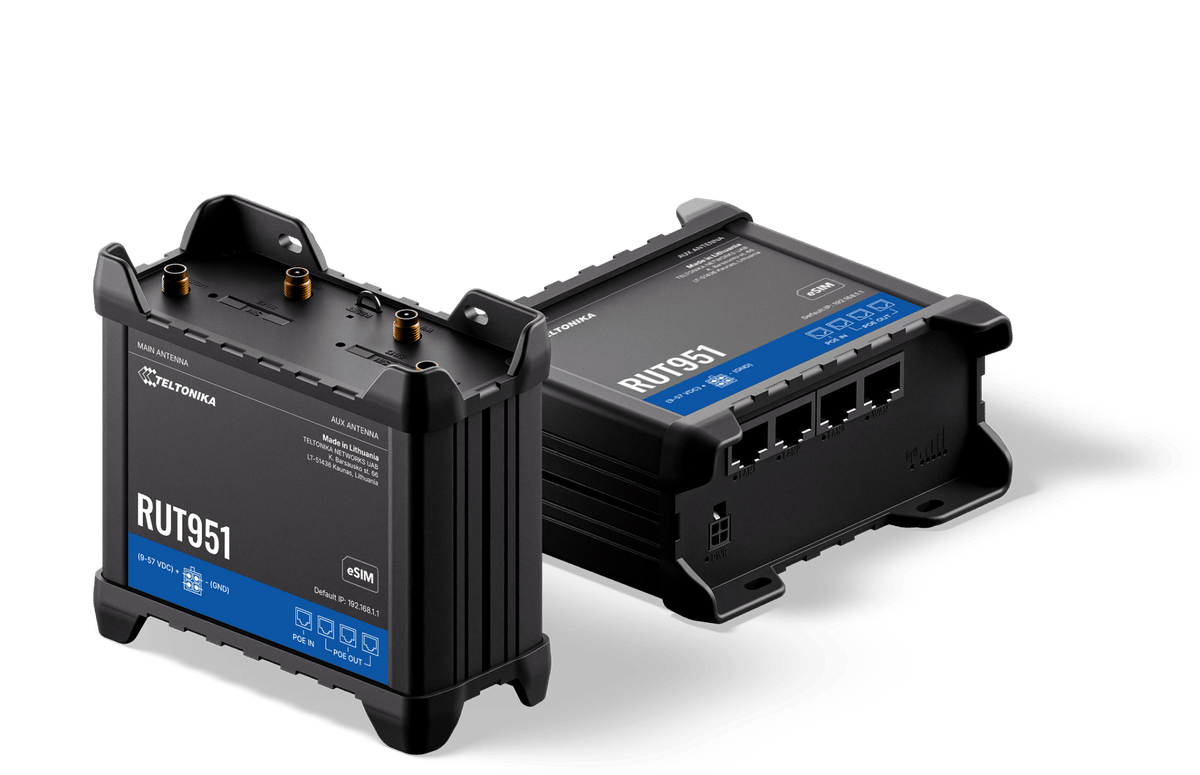
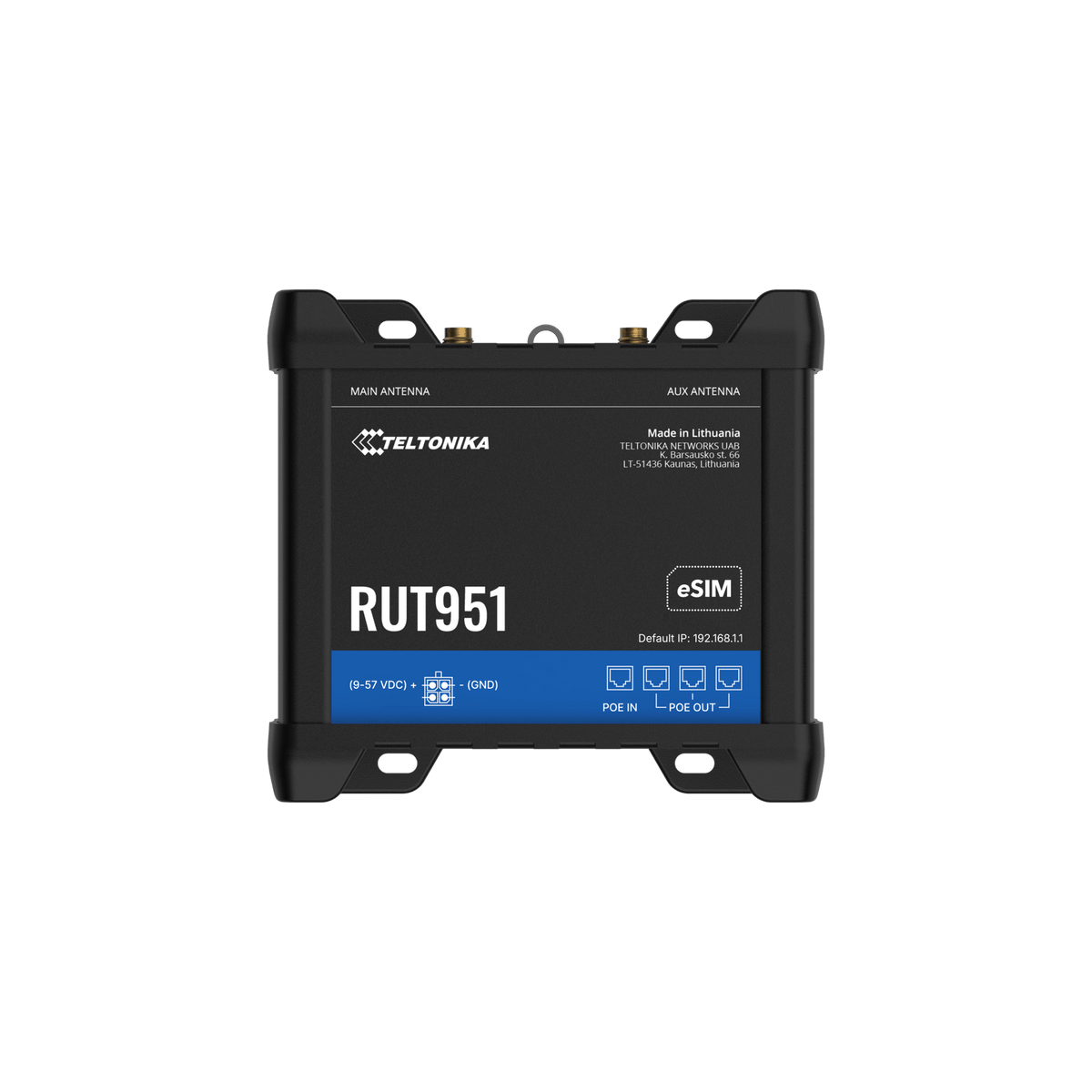
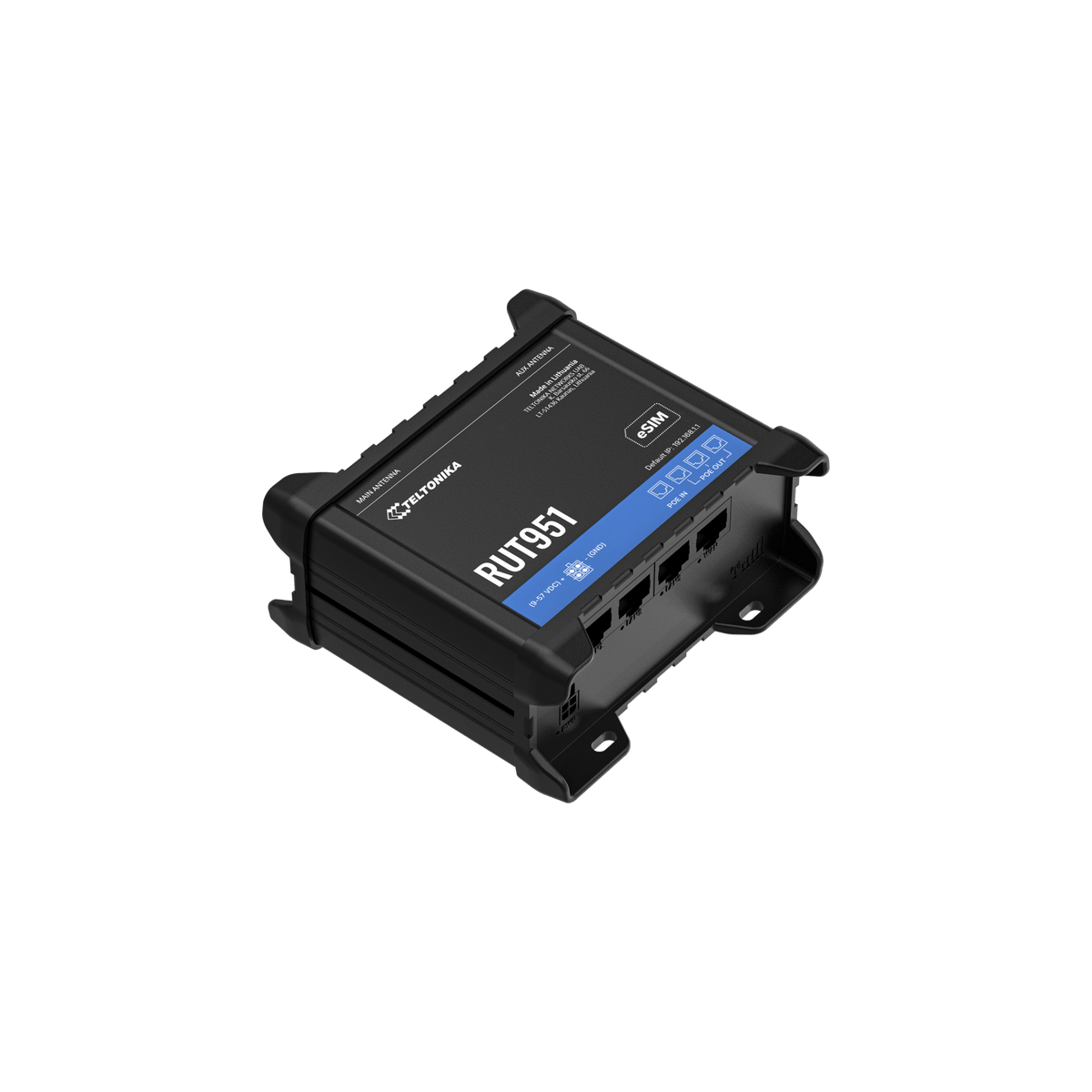
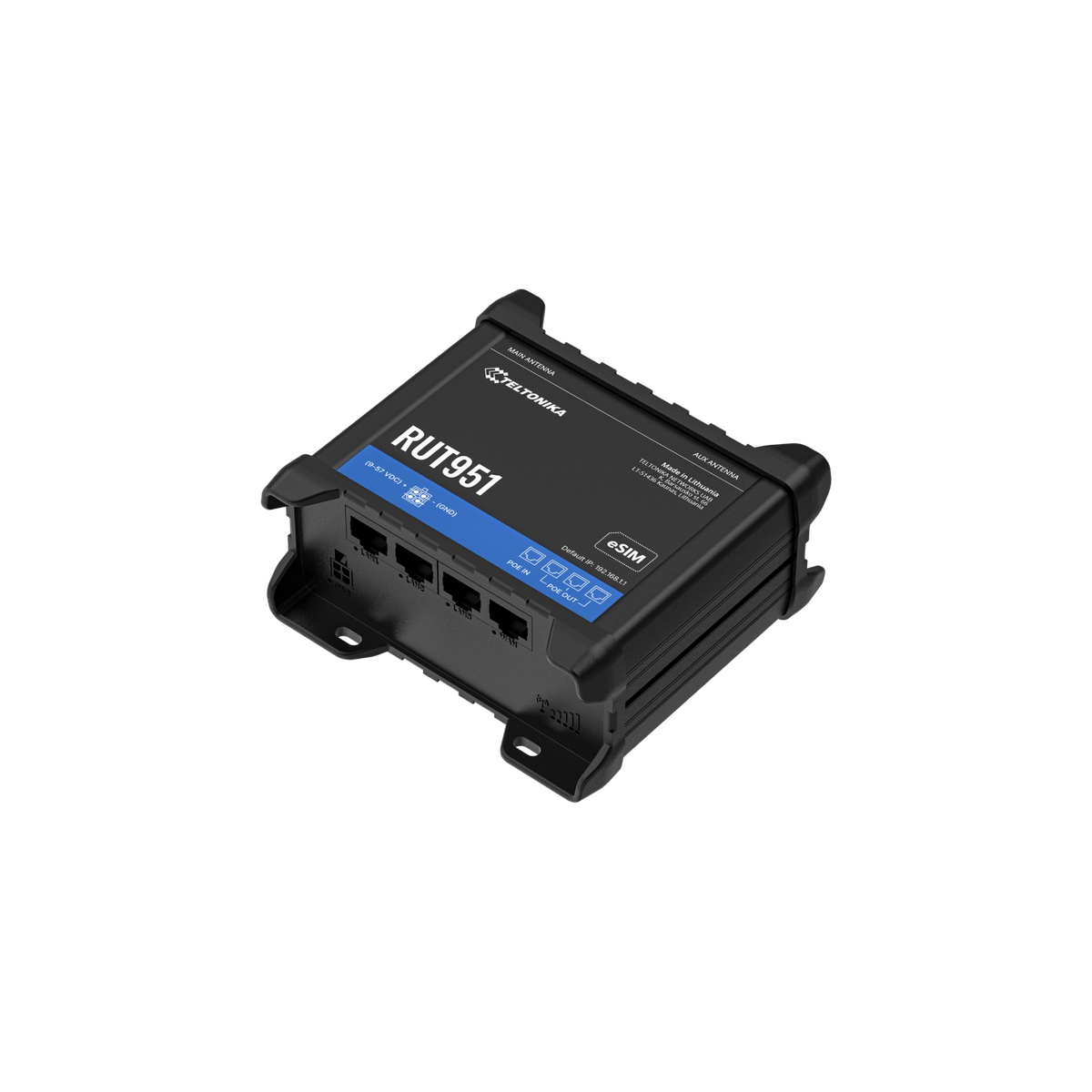
The Teltonika RUT951 PoE+ (RUT951A10P00) is a dual-SIM LTE Cat 4 router for remote sites that need both cellular internet and power for their network gear. Three PoE+ output ports share a 90 W budget, so PoE cameras or access points can run from the router without a separate PoE switch or injector.
It keeps everything our customers like about the standard RUT951, including automatic SIM failover, 2.4 GHz Wi-Fi, and RutOS, and adds a PoE+ input port so the router itself can run from an upstream PoE+ switch. This North American version ships with a U.S. power adapter.
The Telecom Spot Take
The RUT951 PoE+ makes the most sense when a cabinet, pole, or small site has one power outlet and several PoE devices to feed. One box handles LTE backhaul, carrier failover, and power for three devices at 30 W each. Plan your power source carefully: full 90 W output needs a DC supply above 44 V rated at 100 W or more. It is not ideal if you need 5G, 5 GHz Wi-Fi, Gigabit ports, or a hazardous-location rating.
Key Features
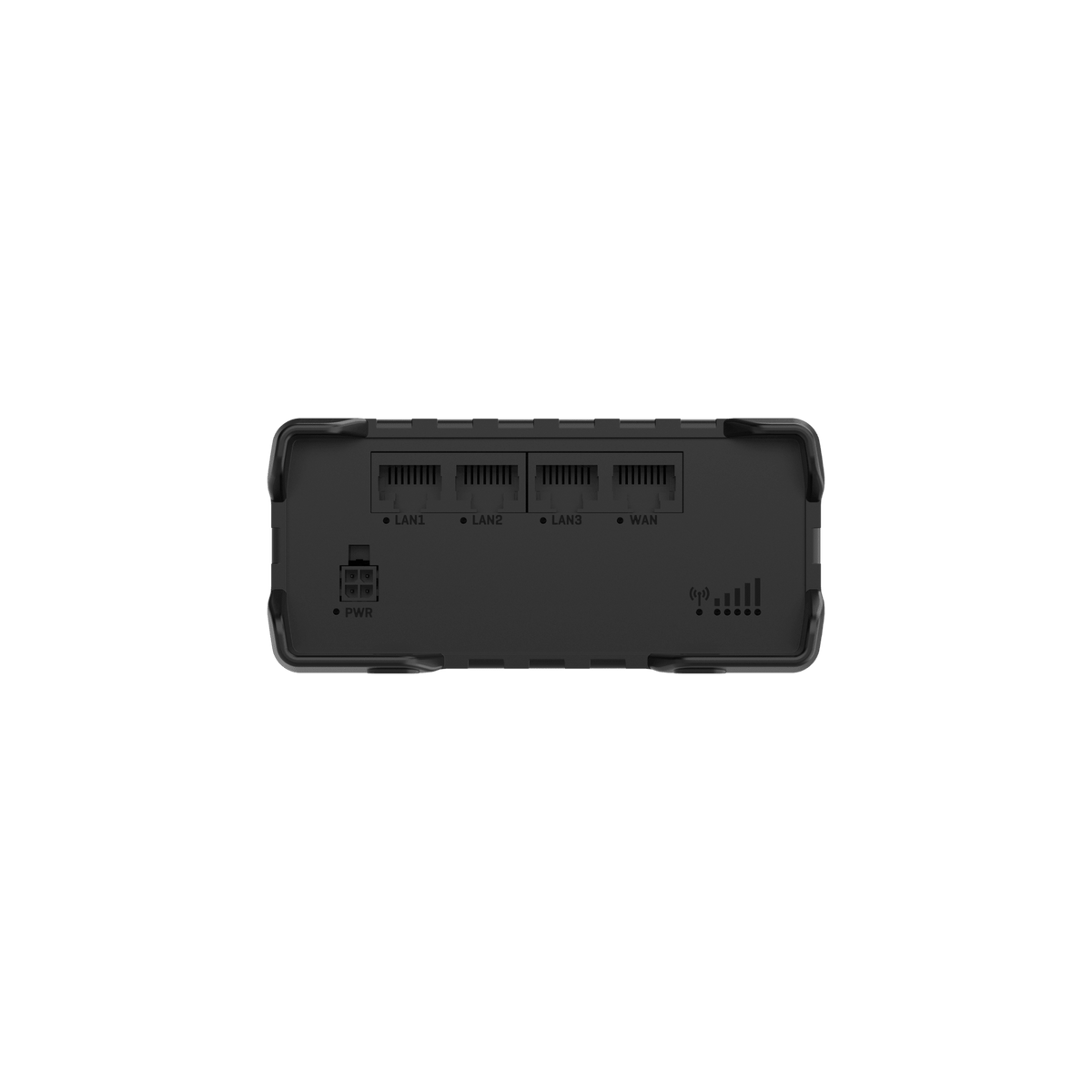
- Three PoE+ output ports: LAN2, LAN3, and WAN act as IEEE 802.3af/at (PoE and PoE+) power sourcing ports, with 30 W per port and a 90 W total budget. PoE cameras, access points, and other PoE+ devices can draw power straight from the router.
- PoE+ powered input: LAN1 is an 802.3af/at powered device port, so the router can take power over the same cable as its data when a PoE+ switch is upstream.
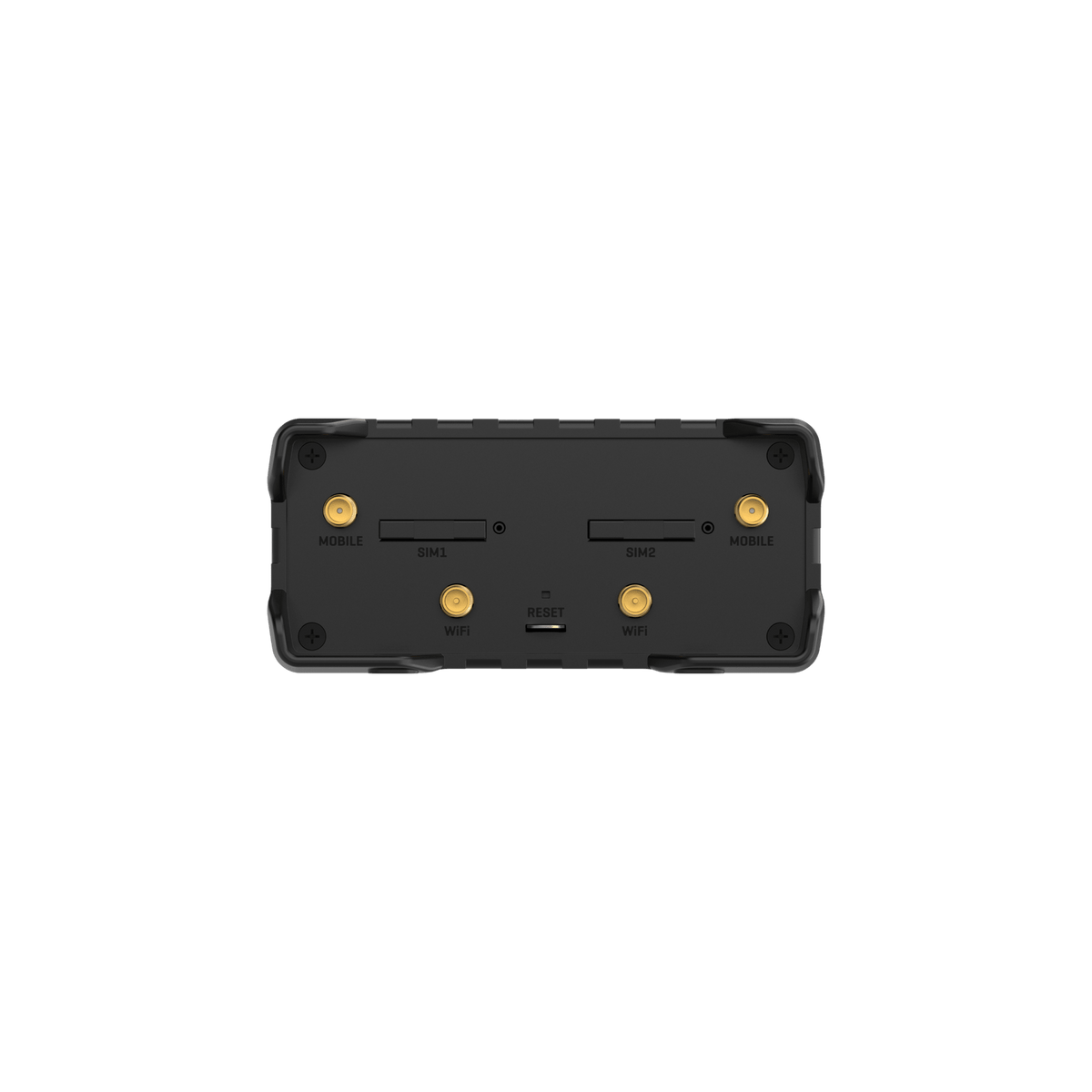
- Dual SIM with auto failover: Two Mini SIM slots switch automatically on weak signal, no network, data connection failure, roaming, or data and SMS limits, so one carrier outage does not take the site down.
- LTE Cat 4 with 3G fallback: 150 Mbps down and 50 Mbps up maximum on LTE, tuned for North American bands including B2, B4, B5, B12, B13, B14, B66, and B71.
- Wide DC input: The 4-pin industrial socket accepts 9-57 VDC with reverse polarity and surge protection for 12 V, 24 V, or 48 V DC power systems.
- 2.4 GHz Wi-Fi access point: Wi-Fi 4 (802.11b/g/n) with hotspot, mesh (802.11s), and fast roaming support for tablets, scanners, and local devices.
- Industrial build: Aluminum housing, -40 °C to 75 °C operating temperature, IP30, and DIN rail, wall, or flat-surface mounting with an optional kit.
- RutOS and RMS: Built-in VPNs (OpenVPN, IPsec, WireGuard, ZeroTier, Tailscale), Modbus, MQTT, and Teltonika RMS for remote monitoring and firmware updates across many sites.
Technical Specifications
| Specification | Detail |
|---|---|
| Brand / model | Teltonika RUT951 PoE+ |
| Order code / SKU | RUT951A10P00 (North America, standard package with U.S. power supply) |
| Cellular | 4G LTE Cat 4 (150 Mbps DL / 50 Mbps UL max); 3G (21 Mbps DL / 5.76 Mbps UL max) |
| LTE bands | LTE-FDD B2, B4, B5, B12, B13, B14, B66, B71; 3G B2, B4, B5 |
| SIM | 2 x Mini SIM (2FF) slots, 1.8 V / 3 V, external holders, automatic SIM switching; eSIM requires a different hardware version |
| Ethernet | 4 x RJ45, 10/100 Mbps: 1 x WAN (configurable as LAN), 3 x LAN |
| PoE input | LAN1; IEEE 802.3af (Type 1) / 802.3at (Type 2), Alternative B powered device port; 44-57 VDC |
| PoE output | LAN2, LAN3, WAN; IEEE 802.3af (Type 1) / 802.3at (Type 2), Alternative A PSE ports |
| PoE power per port | 30 W max (at PSE) |
| PoE power budget | 90 W total (at PSE) |
| PoE output by power source | 4-pin DC above 44 V from a 100 W or larger supply: 90 W (3 ports 802.3at); PoE+ (802.3at) input: 15 W (1 port 802.3af); PoE (802.3af) input: no PoE output; 4-pin DC below 44 V: no PoE output |
| DC power input | 4-pin industrial socket, 9-57 VDC, reverse polarity protection, surge protection >58 VDC 10 µs max |
| Power consumption | Idle <5 W; max <6.5 W (router); 100 W max with full PoE load |
| Bundled power adapter | 100-240 VAC, 1.5 A input; 48 VDC, 1.3 A output; 4-pin plug |
| Wi-Fi | 802.11b/g/n (Wi-Fi 4), access point and station modes; 100 simultaneous users max; hotspot, 802.11s mesh, 802.11r/k/v |
| I/O | 1 x digital input, 1 x digital output (on the 4-pin power connector) |
| Processor / memory | MediaTek 580 MHz MIPS 24KEc; 128 MB DDR2 RAM; 16 MB SPI flash |
| Antenna connectors | 2 x SMA (LTE), 2 x RP-SMA (Wi-Fi) |
| Status LEDs | 1 x bi-color connection status, 5 x mobile signal strength, 4 x Ethernet status, 1 x power |
| Operating system | RutOS (OpenWrt-based Linux) |
| VPN | OpenVPN, IPsec, GRE, PPTP, L2TP, Stunnel, DMVPN, SSTP, ZeroTier, WireGuard, Tinc, Tailscale |
| Management | WebUI, FOTA, SSH, SMS, call, email, TR-069, MQTT, SNMP, JSON-RPC, Modbus, Teltonika RMS |
| Housing | Aluminum housing, plastic panels; IP30 |
| Dimensions (W x H x D) | 110 x 50 x 100 mm |
| Weight | 287 g |
| Mounting | DIN rail, wall, or flat surface (each requires an additional kit) |
| Operating temperature | -40 °C to 75 °C |
| Operating humidity | 10% to 90% non-condensing |
| Americas certifications | FCC, IC (ISED), PTCRB, UL/CSA Safety, NOM; carrier: AT&T, Verizon, T-Mobile |
| Package box (W x H x D) | 355 x 60 x 175 mm |
| HS / HTS code | 851762 / 8517.62.00 |
What's in the Box
- RUT951 PoE+ router
- U.S. power adapter (48 VDC, 1.3 A, 4-pin plug)
- 2 x mobile antennas (swivel, SMA male, 4.08 dBi)
- 2 x Wi-Fi antennas (swivel, RP-SMA male, 5 dBi)
- Ethernet cable (1.5 m)
- SIM adapter kit
- Quick Start Guide
Mounting brackets and DIN rail hardware are sold separately.
Best For, Use Cases and Setup Tips
Best for: remote cabinets, construction trailers, parking lots, kiosks, and small branches that need LTE internet plus power for two or three PoE devices from a single box.
Not ideal for: sites that need 5G, 5 GHz Wi-Fi, Gigabit Ethernet, more than three powered devices, serial ports, or a Class I, Division 2 hazardous-location rating.
- Size your power supply: Add up the draw of every PoE device. The included 48 VDC, 1.3 A adapter is below the 100 W level needed for the full 90 W budget, so use a larger DC supply above 44 V when all three ports need full PoE+ power.
- Know the PoE-in limits: When the router is powered from an 802.3at switch on LAN1, it can pass 15 W to one 802.3af device. Powered from an 802.3af source, it provides no PoE output.
- Check PoE wiring modes: The output ports use Alternative A (power on pins 1-2 and 3-6), and the input port uses Alternative B.
- First login: Browse to 192.168.1.1, sign in as admin with the password printed on the device label, and set a new password (8+ characters with an uppercase letter, a lowercase letter, and a digit). A setup wizard then walks you through the main settings.
- Signal and SIM care: Check Status → Network for signal strength and adjust the antennas as needed. In high-vibration spots, apply a thin layer of dielectric grease to SIM contacts, and use industrial-grade SIM cards for extreme temperatures or humid, corrosive air.
Comparison at a Glance
| Model | SIM | Ethernet | Power and extras | Housing |
|---|---|---|---|---|
| RUT951 PoE+ | 2 SIM | 4 x RJ45 | 3 x PoE+ out (90 W total), PoE+ in, 9-57 VDC, 2.4 GHz Wi-Fi, 1 DI / 1 DO | 110 x 50 x 100 mm, 287 g |
| RUT951 | 2 SIM | 4 x RJ45 | 2.4 GHz Wi-Fi, 1 DI / 1 DO, Class I Div 2 rated | 110 x 50 x 100 mm |
| RUT956 | 2 SIM | 4 x RJ45 | Adds RS-232, RS-485, GNSS, and USB | 109.5 x 50 x 100 mm |
FAQ
How much PoE power can the RUT951 PoE+ deliver?
Three output ports provide 30 W each, with a 90 W total budget. Full output requires a 4-pin DC supply above 44 V rated at 100 W or more.
Is a power supply included with RUT951A10P00?
Yes. This order code is the North American standard package with a U.S. power adapter rated 100-240 VAC input and 48 VDC, 1.3 A output with a 4-pin plug.
Can the router be powered by PoE?
Yes. LAN1 accepts 802.3af or 802.3at power. On 802.3at input, it can supply 15 W to one device; on 802.3af input, PoE output is unavailable.
Which carriers is it certified for?
The RUT951 PoE+ carries AT&T, Verizon, and T-Mobile carrier certifications, plus FCC, IC (ISED), and PTCRB.
What is the difference from the standard RUT951?
The PoE+ version adds PoE+ input and three PoE+ output ports and accepts 9-57 VDC. The standard RUT951 lacks the PoE+ ports but carries a Class I, Division 2 hazardous-location rating.