



Description
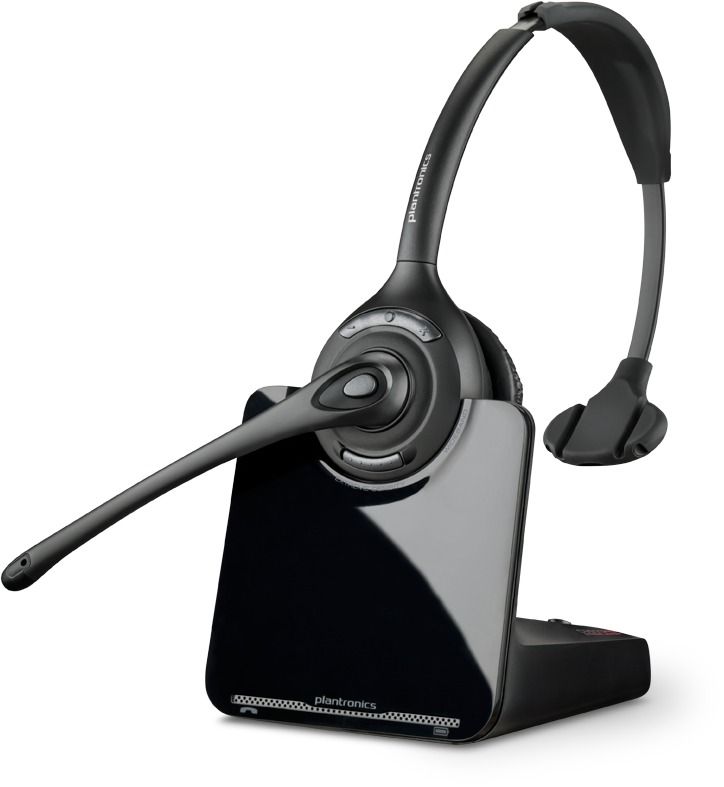
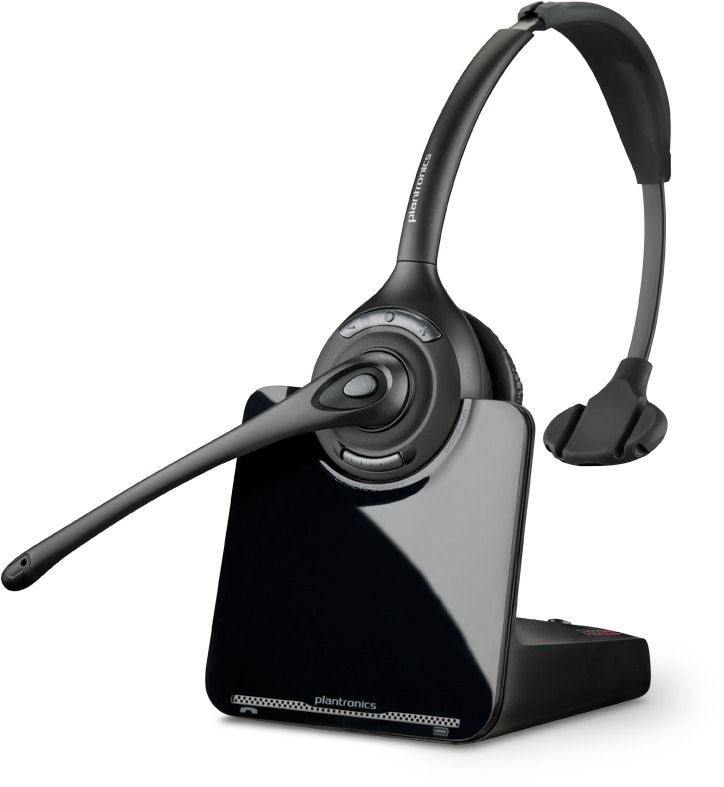
The Poly CS510-XD (7E2J8AA) is a 900MHz DECT wireless headset built specifically for high-density call center environments where multiple wireless headsets operate in the same physical space. The XD (Extra Density) technology provides three times the available DECT channels of standard wireless headsets, allowing up to eight CS500 XD systems in the same area without interference or cross-talk. With 8.5 hours of talk time, a 350-foot range, and SoundGuard DIGITAL audio protection, the CS510-XD delivers enterprise-grade wireless reliability where standard headsets would fail.
The Telecom Spot Take
Standard wireless headsets — including the regular CS510 — start running into channel congestion when you have more than a handful of units in the same room. The CS510-XD solves that problem at the hardware level. If you're deploying 20, 40, or 100+ wireless headsets in an open-plan contact center, the XD series is not optional — it's the only Poly wireless headset designed to handle that density without degraded audio or dropped connections. The monaural over-the-head design keeps the setup simple and weight down. If your center runs dual-screen agents who need to hear ambient floor audio on one ear, the mono format is the right call; for those who need full noise isolation, the CS520-XD (stereo/binaural) is the same platform in a binaural form factor.
Key Features
- Extra Density (XD) Technology: Provides 3x the DECT channel capacity of standard headsets, supporting up to 8 units in the same area without interference — essential for large open-plan contact centers.
- 8.5 Hours Talk Time: Full shift coverage for a standard 8-hour agent day with buffer to spare.
- 350 ft / ~100 m Range: Covers most contact center floor plans, allowing agents to move freely between workstations, breakrooms, and filing areas.
- SoundGuard DIGITAL: Three-layer audio protection — limits peaks above 118 dBA, anti-startle detection for sudden loud sounds, and time-weighted average to prevent chronic noise exposure above 85 dBA.
- 900MHz DECT: Operates on the 900MHz DECT band, completely separate from Wi-Fi (2.4/5GHz) and Bluetooth — no wireless congestion from other office devices.
- Monaural Over-the-Head: Lightweight single-ear design keeps ambient awareness available — practical for floor supervisors and agents in collaborative environments.
Technical Specifications
| Specification | Detail |
|---|---|
| HP SKU | 7E2J8AA |
| Wireless Technology | 900MHz DECT (XD Extra Density) |
| Talk Time | Up to 8.5 hours |
| Wireless Range | Up to 350 ft / ~100 m |
| Wearing Style | Monaural over-the-head |
| Audio | Mono (monaural) |
| Headset Weight | 74 g |
| Audio Protection | SoundGuard DIGITAL (118 dBA peak limit, anti-startle, TWA) |
| Density | Up to 8 XD systems per area |
| Phone Connectivity | Desk phone via RJ-11 base |
Comparison at a Glance
| CS510-XD (this product) | CS510 (standard) | Savi 7210 Office | |
|---|---|---|---|
| Frequency | 900MHz DECT | 900MHz DECT | 1.9GHz DECT |
| Density Support | Up to 8 per area (XD) | Standard density | Standard density |
| Talk Time | 8.5 hrs | 7 hrs | Up to 13 hrs |
| Range | 350 ft | 350 ft | 590 ft |
| PC Connection | Desk phone only | Desk phone only | Desk phone + PC + mobile |
Frequently Asked Questions
- What does "XD" mean, and why does it matter?
- XD stands for Extra Density. Standard DECT headsets can interfere with each other when too many are used in the same area. The XD platform increases the number of available DECT channels by 3x, allowing up to 8 CS500 XD systems to operate in close proximity without audio degradation or dropped connections — critical for large contact center floors.
- Does the CS510-XD work with PC softphones?
- No — the CS510-XD connects to desk phones only via the RJ-11 base. For a headset that connects to both desk phone and PC, see the Savi 7210 or Savi 8210 series.
- Can I mix CS510-XD and CS520-XD on the same floor?
- Yes — the CS510-XD (mono) and CS520-XD (stereo/binaural) are part of the same CS500 XD Series platform and operate on the same XD channel pool. Both can be deployed together in a high-density environment.